
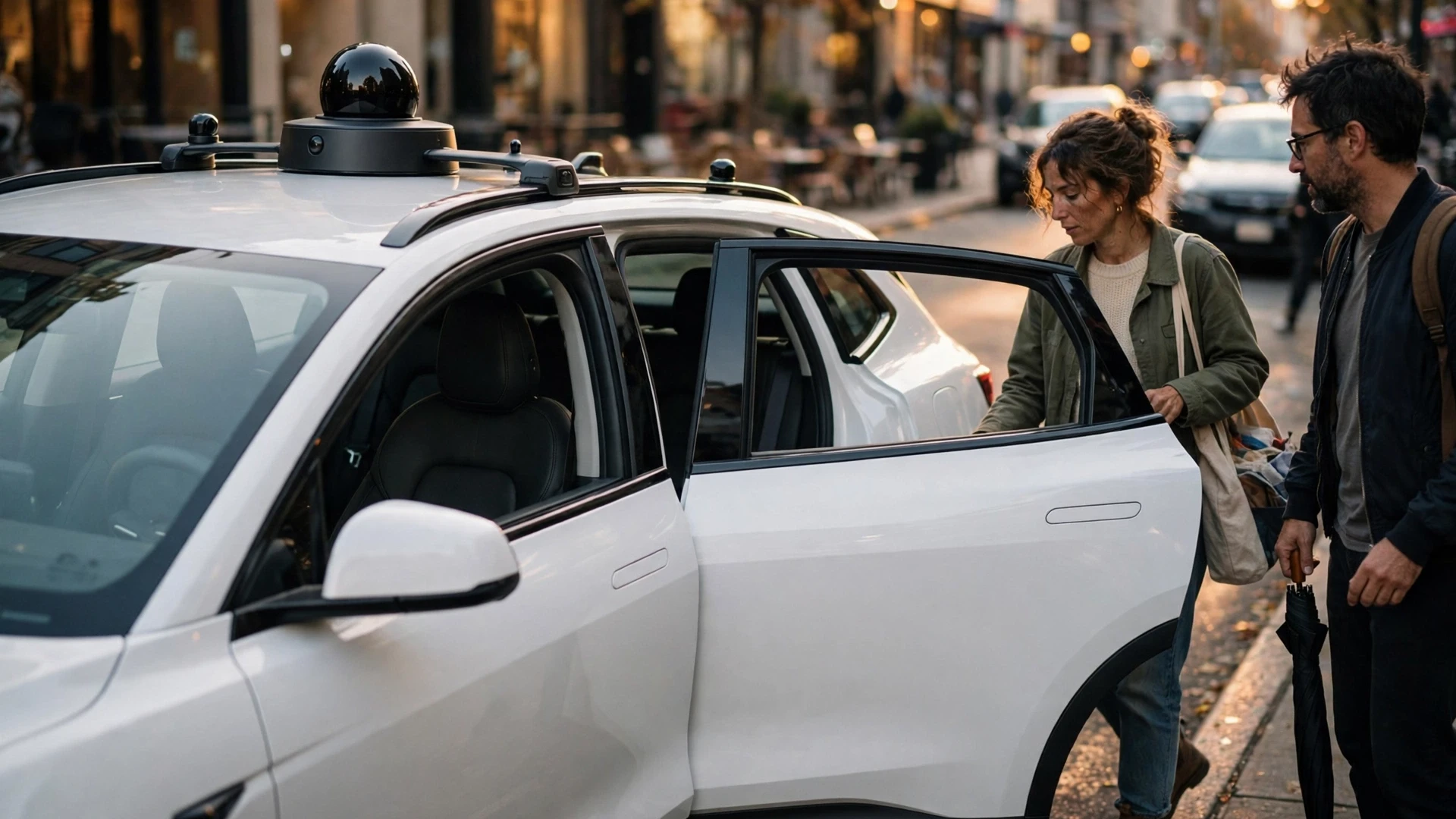
The takeaway: Waymo just borrowed $5 billion, its first-ever debt financing, to put more driverless cars on more streets in more countries. The robotaxi era is moving from experiment to expansion.
Good morning. Every so often a single deal tells you where an entire industry is heading. This is one of those weeks. Waymo, the driverless-car company owned by Alphabet, announced on October 8 that it has closed a $5 billion loan, and the lineup of lenders reads like a who’s who of global finance. If you have ever wondered when robotaxis stop being a novelty and start being infrastructure, this is the moment to pay attention.
Why it matters this week
Until now, Waymo had raised money only through equity, selling ownership stakes to investors. The company pulled in $16 billion in February 2026 at a $126 billion valuation, with backers including Dragoneer, DST Global and Sequoia, while Alphabet kept majority control. Earlier rounds brought $3.2 billion in 2020, $2.5 billion in 2021 and $5.6 billion in a 2024 Series C. Debt is different. Lenders expect to be paid back, with interest, on a schedule. That banks and asset managers of this caliber are willing to lend Waymo $5 billion says they believe the cash will flow.
Goldman Sachs was the sole lead bookrunner, and the syndicate includes Blackstone, PIMCO, Sixth Street, Apollo, Blue Owl, Capital Group, Loomis Sayles, T. Rowe Price, Diameter Capital Partners, Franklin Templeton, Fidelity Management & Research, HPS Investment Partners and Oaktree. When that many heavyweights line up on the same trade, the smart money has a view: robotaxis are becoming a business, not a science project.
What commuters and city dwellers should expect
Waymo says the money funds expansion in the US cities it already serves and pushes into new markets across the United States, Europe and Japan. The company already operates in 15 US markets and is testing in London and Tokyo. The practical takeaway for city life is simple: driverless pickups are about to become a normal part of the curb. Airport runs, late-night rides home, the trip across town when parking costs more than the ride – the routes where robotaxis already compete are exactly where this money goes next.
Our morning briefing from Times Square captured a city whose streets never stop moving. Waymo is betting that a growing share of that motion needs no driver at all. For travelers, that means planning trips the way you already plan flights: check whether your destination has robotaxi coverage before you book, because the cheapest and easiest last mile may soon come with no one in the front seat.
What it means for cities
City planners have been waiting for this signal. A $5 billion expansion means more curb demand, more pickup zones and more conversations about congestion pricing and parking. The cities that move first on dedicated robotaxi lanes and clear curb rules will get better service sooner. Expect city councils in Waymo’s new markets to start talking about all of this within months.
The money behind it
A company spokesperson said the loan gives Waymo “financial flexibility” to “capitalize on the significant opportunities ahead,” pointing to improved commercial demand and the road-safety outcomes the company’s data shows. Translation: the rides are selling, and the safety record is holding up. Equity money bets on the future; debt money prices the present. Waymo now has both, which gives it options no rival can match.
The timing matters too. Raising debt at this scale requires audited numbers, real revenue and a path lenders can model. Startups with unproven economics do not get $5 billion from Blackstone and PIMCO. The fact that Waymo did is itself a data point about where robotaxi unit economics stand.
What to watch next
Watch which new cities get announced first, and when London and Tokyo move from testing to paying passengers. Those two cities are among the hardest driving environments on earth: narrow streets, dense traffic, unpredictable weather. If Waymo goes live there, the technology has crossed its toughest threshold. Also watch pricing. Scale usually pushes prices down, and robotaxis have no driver wages to pay. The commuter who does the math this year may find the driverless option winning on cost, not just convenience. That is the real headline of this loan: the robotaxi business now has credit. And credit is what turns pilots into infrastructure.
































Be First to Comment